
Acting

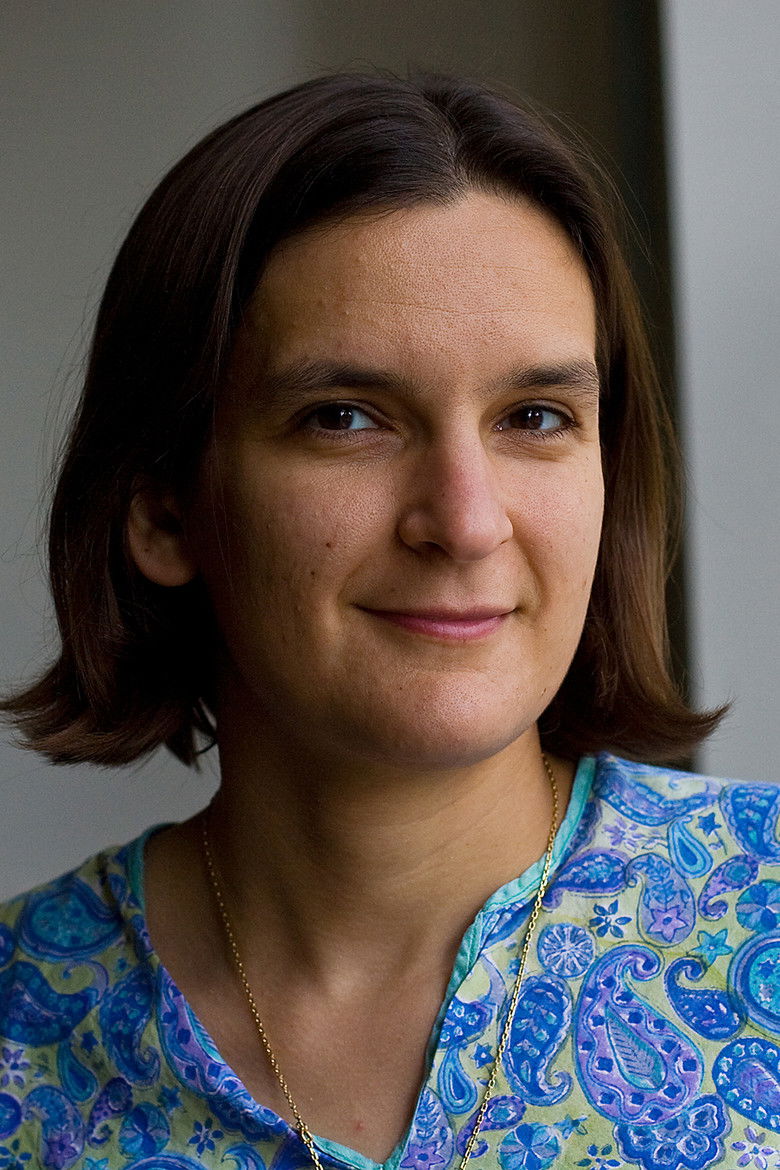
Esther Duflo

born 1972 · Acting

58.5avg grm
1title
26honors

Honors

26
2023Honorary doctor of the University of Liège
2020Commander of the Legion of Honour
2019Prize in Economic Sciences in Memory of Alfred Nobel
2019honorary doctor of Erasmus University Rotterdam
2015Princess of Asturias Award — Social Sciences
Honors
  • 2023Honorary doctor of the University of Liège
  • 2020Commander of the Legion of Honour
  • 2019Prize in Economic Sciences in Memory of Alfred Nobel
  • 2019honorary doctor of Erasmus University Rotterdam
  • 2015Princess of Asturias Award — Social Sciences
  • 2015honorary degree of HEC Paris
  • 2014Infosys Prize
  • 2014Erna Hamburger Prize
  • 2014Albert O. Hirschman Prize
  • 2013Dan David Prize
  • 2013John von Neumann Award
  • 2013Officer of the National Order of Merit
  • 2013honorary doctor of Yale University
  • 2011CNRS innovation medal
  • 2010John Bates Clark Medal
  • 2010Calvó-Armengol International Prize
  • 2010Honorary doctor of the Catholic University of Louvain
  • 2010Fellow of the Econometric Society
  • 2009MacArthur Fellows Program
  • 2008Prix Luc-Durand-Réville
  • 2005Prix du meilleur jeune économiste de France
  • 2005CNRS bronze medal
  • 2002Sloan Fellowship
  • 2002Elaine Bennett Research Prize
  • —Fellow of the British Academy
  • —Fellow of the American Academy of Arts and Sciences

Bio

Esther Duflo Banerjee, FBA (born 25 October 1972) is a French–American economist who is a professor of Poverty Alleviation and Development Economics at the Massachusetts Institute of Technology (MIT). She is the co-founder and co-director of the Abdul Latif Jameel Poverty Action Lab (J-PAL), which was established in 2003. She shared the 2019 Nobel Memorial Prize in Economic Sciences with Abhijit Banerjee and Michael Kremer, "for their experimental approach to alleviating global poverty". Duflo is a National Bureau of Economic Research (NBER) research associate, a board member of the Bureau for Research and Economic Analysis of Development (BREAD), and director of the Centre for Economic Policy Research's development economics program. Her research focuses on microeconomic issues in developing countries, including household behavior, education, access to finance, health, and policy evaluation. Together with Abhijit Banerjee, Dean Karlan, Michael Kremer, John A. List, and Sendhil Mullainathan, she has been a driving force in advancing field experiments as an important methodology to discover causal relationships in economics. Together with Abhijit Banerjee, she wrote Poor Economics and Good Economics for Hard Times, published in April 2011 and November 2019, respectively. According to the Open Syllabus Project, Duflo is the seventh most frequently cited author on college syllabi for economics courses. Duflo was born in 1972 in Paris, the daughter of pediatrician Violaine Duflo and mathematics professor Michel Duflo. During Duflo's childhood, her mother often participated in medical humanitarian projects. After studying in the B/L program of Lycée Henri-IV's Classes préparatoires, Duflo began her undergraduate studies at École normale supérieure in Paris, planning to study history, her interest since childhood. In her second year, she began considering a career in the civil service or politics. She spent ten months in Moscow starting in 1993. She taught French and worked on a history thesis that described how the Soviet Union "had used the big construction sites, like the Stalingrad tractor factory, for propaganda, and how propaganda requirements changed the actual shape of the projects." In Moscow, she also worked as a research assistant for a French economist connected to the Central Bank of Russia and, separately, for Jeffrey Sachs, an American economist who was advising the Russian Minister of Finance. The experiences at these research posts led her to conclude that "economics had potential as a lever of action in the world" and she could satisfy academic ambitions while doing "things that mattered". ... Source: Article "Esther Duflo" from Wikipedia in English, licensed under CC-BY-SA 3.0.
Biography

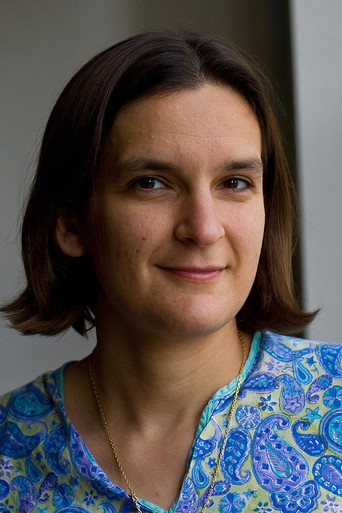
Esther Duflo Banerjee, FBA (born 25 October 1972) is a French–American economist who is a professor of Poverty Alleviation and Development Economics at the Massachusetts Institute of Technology (MIT). She is the co-founder and co-director of the Abdul Latif Jameel Poverty Action Lab (J-PAL), which was established in 2003. She shared the 2019 Nobel Memorial Prize in Economic Sciences with Abhijit Banerjee and Michael Kremer, "for their experimental approach to alleviating global poverty". Duflo is a National Bureau of Economic Research (NBER) research associate, a board member of the Bureau for Research and Economic Analysis of Development (BREAD), and director of the Centre for Economic Policy Research's development economics program. Her research focuses on microeconomic issues in developing countries, including household behavior, education, access to finance, health, and policy evaluation. Together with Abhijit Banerjee, Dean Karlan, Michael Kremer, John A. List, and Sendhil Mullainathan, she has been a driving force in advancing field experiments as an important methodology to discover causal relationships in economics. Together with Abhijit Banerjee, she wrote Poor Economics and Good Economics for Hard Times, published in April 2011 and November 2019, respectively. According to the Open Syllabus Project, Duflo is the seventh most frequently cited author on college syllabi for economics courses. Duflo was born in 1972 in Paris, the daughter of pediatrician Violaine Duflo and mathematics professor Michel Duflo. During Duflo's childhood, her mother often participated in medical humanitarian projects. After studying in the B/L program of Lycée Henri-IV's Classes préparatoires, Duflo began her undergraduate studies at École normale supérieure in Paris, planning to study history, her interest since childhood. In her second year, she began considering a career in the civil service or politics. She spent ten months in Moscow starting in 1993. She taught French and worked on a history thesis that described how the Soviet Union "had used the big construction sites, like the Stalingrad tractor factory, for propaganda, and how propaganda requirements changed the actual shape of the projects." In Moscow, she also worked as a research assistant for a French economist connected to the Central Bank of Russia and, separately, for Jeffrey Sachs, an American economist who was advising the Russian Minister of Finance. The experiences at these research posts led her to conclude that "economics had potential as a lever of action in the world" and she could satisfy academic ambitions while doing "things that mattered". ... Source: Article "Esther Duflo" from Wikipedia in English, licensed under CC-BY-SA 3.0.

Filmography

ranked on this site
2010s1 titlePPoor Us: An Animated History of Poverty2012 · as Self - Poverty Action Lab58.5

Browse the ranked list

you've reached the bottom
goodrecmovies
movies worth your night.

This product uses TMDB and the TMDB APIs but is not endorsed, certified, or otherwise approved by TMDB.

← back

Esther Duflo

E
born1972
known forActing
titles on site1
avg GRM58.5
honors26 · Honorary doctor of the University of Liège, 2023
Honors
  • 2023Honorary doctor of the University of Liège
  • 2020Commander of the Legion of Honour
  • 2019Prize in Economic Sciences in Memory of Alfred Nobel
  • 2019honorary doctor of Erasmus University Rotterdam
  • 2015Princess of Asturias Award — Social Sciences
  • 2015honorary degree of HEC Paris
  • 2014Infosys Prize
  • 2014Erna Hamburger Prize
  • 2014Albert O. Hirschman Prize
  • 2013Dan David Prize
  • 2013John von Neumann Award
  • 2013Officer of the National Order of Merit
  • 2013honorary doctor of Yale University
  • 2011CNRS innovation medal
  • 2010John Bates Clark Medal
  • 2010Calvó-Armengol International Prize
  • 2010Honorary doctor of the Catholic University of Louvain
  • 2010Fellow of the Econometric Society
  • 2009MacArthur Fellows Program
  • 2008Prix Luc-Durand-Réville
  • 2005Prix du meilleur jeune économiste de France
  • 2005CNRS bronze medal
  • 2002Sloan Fellowship
  • 2002Elaine Bennett Research Prize
  • —Fellow of the British Academy
  • —Fellow of the American Academy of Arts and Sciences
Esther Duflo Banerjee, FBA (born 25 October 1972) is a French–American economist who is a professor of Poverty Alleviation and Development Economics at the Massachusetts Institute of Technology (MIT). She is the co-founder and co-director of the Abdul Latif Jameel Poverty Action Lab (J-PAL), which was established in 2003. She shared the 2019 Nobel Memorial Prize in Economic Sciences with Abhijit Banerjee and Michael Kremer, "for their experimental approach to alleviating global poverty". Duflo is a National Bureau of Economic Research (NBER) research associate, a board member of the Bureau for Research and Economic Analysis of Development (BREAD), and director of the Centre for Economic Policy Research's development economics program. Her research focuses on microeconomic issues in developing countries, including household behavior, education, access to finance, health, and policy evaluation. Together with Abhijit Banerjee, Dean Karlan, Michael Kremer, John A. List, and Sendhil Mullainathan, she has been a driving force in advancing field experiments as an important methodology to discover causal relationships in economics. Together with Abhijit Banerjee, she wrote Poor Economics and Good Economics for Hard Times, published in April 2011 and November 2019, respectively. According to the Open Syllabus Project, Duflo is the seventh most frequently cited author on college syllabi for economics courses. Duflo was born in 1972 in Paris, the daughter of pediatrician Violaine Duflo and mathematics professor Michel Duflo. During Duflo's childhood, her mother often participated in medical humanitarian projects. After studying in the B/L program of Lycée Henri-IV's Classes préparatoires, Duflo began her undergraduate studies at École normale supérieure in Paris, planning to study history, her interest since childhood. In her second year, she began considering a career in the civil service or politics. She spent ten months in Moscow starting in 1993. She taught French and worked on a history thesis that described how the Soviet Union "had used the big construction sites, like the Stalingrad tractor factory, for propaganda, and how propaganda requirements changed the actual shape of the projects." In Moscow, she also worked as a research assistant for a French economist connected to the Central Bank of Russia and, separately, for Jeffrey Sachs, an American economist who was advising the Russian Minister of Finance. The experiences at these research posts led her to conclude that "economics had potential as a lever of action in the world" and she could satisfy academic ambitions while doing "things that mattered". ... Source: Article "Esther Duflo" from Wikipedia in English, licensed under CC-BY-SA 3.0.

Filmography

ranked on this site

Browse the ranked list