
Acting

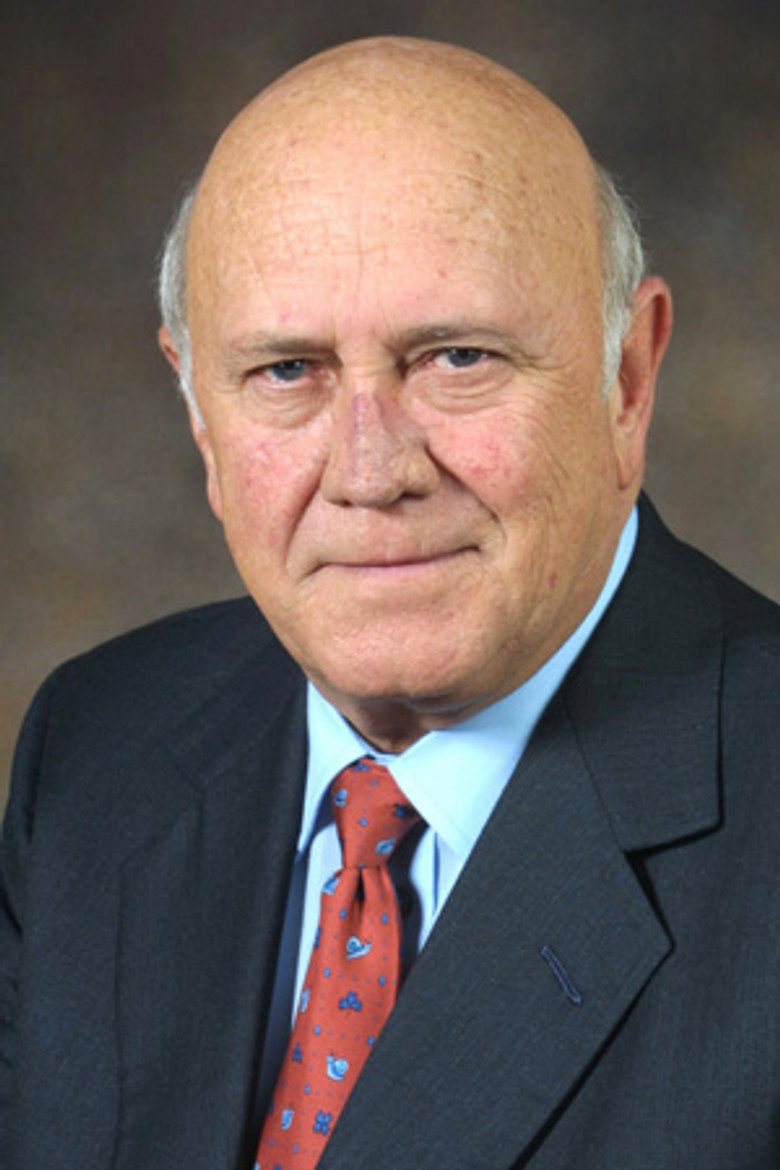
F.W. de Klerk

1936–2021 · Acting

58.5avg grm
1title
10honors

Honors

10
1993Nobel Peace Prize
1991Félix Houphouët-Boigny Peace Prize
1992Princess of Asturias Award — International Cooperation
1993honorary doctorate of the Vrije Universiteit Brussel
2002Order of Mapungubwe in Gold
Honors
  • 1993Nobel Peace Prize
  • 1991Félix Houphouët-Boigny Peace Prize
  • 1992Princess of Asturias Award — International Cooperation
  • 1993honorary doctorate of the Vrije Universiteit Brussel
  • 2002Order of Mapungubwe in Gold
  • —Princess of Asturias Awards
  • —Order of Good Hope
  • —James Joyce Awards
  • —Philadelphia Liberty Medal
  • —honorary doctorate of Haifa University

Bio

From Wikipedia, the free encyclopedia. Frederik Willem de Klerk (born 18 March 1936), often known as F. W. de Klerk, was the seventh and last State President of apartheid-era South Africa, serving from September 1989 to May 1994. de Klerk was also leader of the National Party (which later became the New National Party) from February 1989 to September 1997. de Klerk is best known for engineering the end of apartheid, South Africa's racial segregation policy, and supporting the transformation of South Africa into a multi-racial democracy by entering into the negotiations that resulted in all citizens, including the country's black majority, having equal voting and other rights. He won Félix Houphouët-Boigny Peace Prize in 1991, Prince of Asturias Awards in 1992 and the Nobel Peace Prize in 1993 along with Nelson Mandela for his role in the ending of apartheid. He was one of the Deputy Presidents of South Africa during the presidency of Nelson Mandela until 1996, the last white person to hold the position to date. In 1997, he retired from politics. Description above from the Wikipedia article F. W. de Klerk, licensed under CC-BY-SA, full list of contributors on Wikipedia.
Biography

From Wikipedia, the free encyclopedia. Frederik Willem de Klerk (born 18 March 1936), often known as F. W. de Klerk, was the seventh and last State President of apartheid-era South Africa, serving from September 1989 to May 1994. de Klerk was also leader of the National Party (which later became the New National Party) from February 1989 to September 1997. de Klerk is best known for engineering the end of apartheid, South Africa's racial segregation policy, and supporting the transformation of South Africa into a multi-racial democracy by entering into the negotiations that resulted in all citizens, including the country's black majority, having equal voting and other rights. He won Félix Houphouët-Boigny Peace Prize in 1991, Prince of Asturias Awards in 1992 and the Nobel Peace Prize in 1993 along with Nelson Mandela for his role in the ending of apartheid. He was one of the Deputy Presidents of South Africa during the presidency of Nelson Mandela until 1996, the last white person to hold the position to date. In 1997, he retired from politics. Description above from the Wikipedia article F. W. de Klerk, licensed under CC-BY-SA, full list of contributors on Wikipedia.

Filmography

ranked on this site
2010s1 titleMMiracle Rising: South Africa201358.5

Browse the ranked list

you've reached the bottom
goodrecmovies
movies worth your night.

This product uses TMDB and the TMDB APIs but is not endorsed, certified, or otherwise approved by TMDB.

← back

F.W. de Klerk

F
born1936
died2021
known forActing
titles on site1
avg GRM58.5
honors10 · Nobel Peace Prize, 1993
Honors
  • 1993Nobel Peace Prize
  • 1991Félix Houphouët-Boigny Peace Prize
  • 1992Princess of Asturias Award — International Cooperation
  • 1993honorary doctorate of the Vrije Universiteit Brussel
  • 2002Order of Mapungubwe in Gold
  • —Princess of Asturias Awards
  • —Order of Good Hope
  • —James Joyce Awards
  • —Philadelphia Liberty Medal
  • —honorary doctorate of Haifa University
From Wikipedia, the free encyclopedia. Frederik Willem de Klerk (born 18 March 1936), often known as F. W. de Klerk, was the seventh and last State President of apartheid-era South Africa, serving from September 1989 to May 1994. de Klerk was also leader of the National Party (which later became the New National Party) from February 1989 to September 1997. de Klerk is best known for engineering the end of apartheid, South Africa's racial segregation policy, and supporting the transformation of South Africa into a multi-racial democracy by entering into the negotiations that resulted in all citizens, including the country's black majority, having equal voting and other rights. He won Félix Houphouët-Boigny Peace Prize in 1991, Prince of Asturias Awards in 1992 and the Nobel Peace Prize in 1993 along with Nelson Mandela for his role in the ending of apartheid. He was one of the Deputy Presidents of South Africa during the presidency of Nelson Mandela until 1996, the last white person to hold the position to date. In 1997, he retired from politics. Description above from the Wikipedia article F. W. de Klerk, licensed under CC-BY-SA, full list of contributors on Wikipedia.

Filmography

ranked on this site

Browse the ranked list