Acting

Carl Sagan

1934–1996 · Acting

67.6avg grm
2titles
20honors

Honors

20
2013Solstice Award
2009New Jersey Hall of Fame
2004International Space Hall of Fame
1998Hugo Award — Best Dramatic Presentation
1998Gerard P. Kuiper Prize
Honors
  • 2013Solstice Award
  • 2009New Jersey Hall of Fame
  • 2004International Space Hall of Fame
  • 1998Hugo Award — Best Dramatic Presentation
  • 1998Gerard P. Kuiper Prize
  • 1994NAS Public Welfare Medal
  • 1993Carl Sagan Award — Public Understanding of Science
  • 1991Masursky Award
  • 1990Oersted Medal
  • 1986Locus Award — Best First Novel
  • 1985Leo Szilard Lectureship Award
  • 1984The Hillman Prize — Magazine Journalism
  • 1981Hugo Award — Best Related Work
  • 1981Humanist of the Year
  • 1978Pulitzer Prize — General Nonfiction
  • 1974Klumpke-Roberts Award
  • —NASA Distinguished Public Service Medal
  • —NASA Exceptional Achievement Medal
  • —James Parks Morton Interfaith Award
  • —Fellow of the Committee — Skeptical Inquiry

Bio

Carl Edward Sagan (November 9, 1934 – December 20, 1996) was an American astronomer, cosmologist, astrophysicist, astrobiologist, author, science popularizer, and science communicator in astronomy and other natural sciences. He is best known for his work as a science popularizer and communicator. His best known scientific contribution is research on extraterrestrial life, including experimental demonstration of the production of amino acids from basic chemicals by radiation. Sagan assembled the first physical messages sent into space: the Pioneer plaque and the Voyager Golden Record, universal messages that could potentially be understood by any extraterrestrial intelligence that might find them. Sagan argued the now accepted hypothesis that the high surface temperatures of Venus can be attributed to and calculated using the greenhouse effect. Sagan published more than 600 scientific papers and articles and was author, co-author or editor of more than 20 books. He wrote many popular science books, such as The Dragons of Eden, Broca's Brain and Pale Blue Dot, and narrated and co-wrote the award-winning 1980 television series Cosmos: A Personal Voyage. The most widely watched series in the history of American public television, Cosmos has been seen by at least 500 million people across 60 different countries. The book Cosmos was published to accompany the series. He also wrote the science fiction novel Contact, the basis for a 1997 film of the same name. Description above from the Wikipedia article Carl Sagan licensed under CC-BY-SA, full list of contributors on Wikipedia.

Biography

Carl Edward Sagan (November 9, 1934 – December 20, 1996) was an American astronomer, cosmologist, astrophysicist, astrobiologist, author, science popularizer, and science communicator in astronomy and other natural sciences. He is best known for his work as a science popularizer and communicator. His best known scientific contribution is research on extraterrestrial life, including experimental demonstration of the production of amino acids from basic chemicals by radiation. Sagan assembled the first physical messages sent into space: the Pioneer plaque and the Voyager Golden Record, universal messages that could potentially be understood by any extraterrestrial intelligence that might find them. Sagan argued the now accepted hypothesis that the high surface temperatures of Venus can be attributed to and calculated using the greenhouse effect. Sagan published more than 600 scientific papers and articles and was author, co-author or editor of more than 20 books. He wrote many popular science books, such as The Dragons of Eden, Broca's Brain and Pale Blue Dot, and narrated and co-wrote the award-winning 1980 television series Cosmos: A Personal Voyage. The most widely watched series in the history of American public television, Cosmos has been seen by at least 500 million people across 60 different countries. The book Cosmos was published to accompany the series. He also wrote the science fiction novel Contact, the basis for a 1997 film of the same name. Description above from the Wikipedia article Carl Sagan licensed under CC-BY-SA, full list of contributors on Wikipedia.

Filmography

ranked on this site
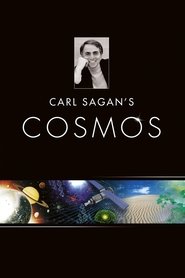
1980s1 titleCCosmos1980 · as Self - Host · series70.8
1960s1 titleRThe Royal Institution Christmas Lectures1966 · as Self - Presenter · series64.4

Browse the ranked list

you've reached the bottom
goodrecmovies
movies worth your night.

This product uses TMDB and the TMDB APIs but is not endorsed, certified, or otherwise approved by TMDB.

← back

Carl Sagan

C
born1934
died1996
known forActing
titles on site2
avg GRM67.6
honors20 · Solstice Award, 2013
Honors
  • 2013Solstice Award
  • 2009New Jersey Hall of Fame
  • 2004International Space Hall of Fame
  • 1998Hugo Award — Best Dramatic Presentation
  • 1998Gerard P. Kuiper Prize
  • 1994NAS Public Welfare Medal
  • 1993Carl Sagan Award — Public Understanding of Science
  • 1991Masursky Award
  • 1990Oersted Medal
  • 1986Locus Award — Best First Novel
  • 1985Leo Szilard Lectureship Award
  • 1984The Hillman Prize — Magazine Journalism
  • 1981Hugo Award — Best Related Work
  • 1981Humanist of the Year
  • 1978Pulitzer Prize — General Nonfiction
  • 1974Klumpke-Roberts Award
  • —NASA Distinguished Public Service Medal
  • —NASA Exceptional Achievement Medal
  • —James Parks Morton Interfaith Award
  • —Fellow of the Committee — Skeptical Inquiry
Carl Edward Sagan (November 9, 1934 – December 20, 1996) was an American astronomer, cosmologist, astrophysicist, astrobiologist, author, science popularizer, and science communicator in astronomy and other natural sciences. He is best known for his work as a science popularizer and communicator. His best known scientific contribution is research on extraterrestrial life, including experimental demonstration of the production of amino acids from basic chemicals by radiation. Sagan assembled the first physical messages sent into space: the Pioneer plaque and the Voyager Golden Record, universal messages that could potentially be understood by any extraterrestrial intelligence that might find them. Sagan argued the now accepted hypothesis that the high surface temperatures of Venus can be attributed to and calculated using the greenhouse effect. Sagan published more than 600 scientific papers and articles and was author, co-author or editor of more than 20 books. He wrote many popular science books, such as The Dragons of Eden, Broca's Brain and Pale Blue Dot, and narrated and co-wrote the award-winning 1980 television series Cosmos: A Personal Voyage. The most widely watched series in the history of American public television, Cosmos has been seen by at least 500 million people across 60 different countries. The book Cosmos was published to accompany the series. He also wrote the science fiction novel Contact, the basis for a 1997 film of the same name. Description above from the Wikipedia article Carl Sagan licensed under CC-BY-SA, full list of contributors on Wikipedia.

Filmography

ranked on this site

Browse the ranked list