Directing

Alain Resnais

1922–2014 · Directing
60.1avg grm
13titles
#1,185best rank
10honors
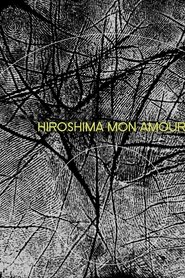
Hbest title · #1,185 on siteHiroshima Mon Amour1959 · as Director74.0

Honors

10
1961Golden Lion
2007European Film Academy Critics Award
1997Louis Delluc Prize
1994César Award — Best Film
1987David di Donatello Luchino Visconti
Honors
  • 1961Golden Lion
  • 2007European Film Academy Critics Award
  • 1997Louis Delluc Prize
  • 1994César Award — Best Film
  • 1987David di Donatello Luchino Visconti
  • 1981Honorary César
  • 1978César Award — Best Director
  • 1963Sutherland Trophy
  • 1961United Nations Awards
  • —Jean-Le-Duc award

Bio

Alain Resnais (3 June 1922 – 1 March 2014) was a French film director and screenwriter whose career extended over more than six decades. After training as a film editor in the mid-1940s, he went on to direct a number of short films which included Night and Fog (1955), an influential documentary about the Nazi concentration camps. Resnais began making feature films in the late 1950s and consolidated his early reputation with Hiroshima mon amour (1959), Last Year at Marienbad (1961), and Muriel (1963), all of which adopted unconventional narrative techniques to deal with themes of troubled memory and the imagined past. These films were contemporary with, and associated with, the French New Wave (la nouvelle vague), though Resnais did not regard himself as being fully part of that movement. He had closer links to the "Left Bank" group of authors and filmmakers who shared a commitment to modernism and an interest in left-wing politics. He also established a regular practice of working on his films in collaboration with writers previously unconnected with the cinema such as Jean Cayrol, Marguerite Duras, Alain Robbe-Grillet, Jorge Semprún and Jacques Sternberg. In later films, Resnais moved away from the overtly political topics of some previous works and developed his interests in an interaction between cinema and other cultural forms, including theatre, music, and comic books. This led to imaginative adaptations of plays by Alan Ayckbourn, Henri Bernstein and Jean Anouilh, as well as films featuring various kinds of popular song. His films frequently explore the relationship between consciousness, memory, and the imagination, and he was noted for devising innovative formal structures for his narratives. Throughout his career, he won many awards from international film festivals and academies. Description above from the Wikipedia article Alain Resnais, licensed under CC-BY-SA, full list of contributors on Wikipedia.

Biography

Alain Resnais (3 June 1922 – 1 March 2014) was a French film director and screenwriter whose career extended over more than six decades. After training as a film editor in the mid-1940s, he went on to direct a number of short films which included Night and Fog (1955), an influential documentary about the Nazi concentration camps. Resnais began making feature films in the late 1950s and consolidated his early reputation with Hiroshima mon amour (1959), Last Year at Marienbad (1961), and Muriel (1963), all of which adopted unconventional narrative techniques to deal with themes of troubled memory and the imagined past. These films were contemporary with, and associated with, the French New Wave (la nouvelle vague), though Resnais did not regard himself as being fully part of that movement. He had closer links to the "Left Bank" group of authors and filmmakers who shared a commitment to modernism and an interest in left-wing politics. He also established a regular practice of working on his films in collaboration with writers previously unconnected with the cinema such as Jean Cayrol, Marguerite Duras, Alain Robbe-Grillet, Jorge Semprún and Jacques Sternberg. In later films, Resnais moved away from the overtly political topics of some previous works and developed his interests in an interaction between cinema and other cultural forms, including theatre, music, and comic books. This led to imaginative adaptations of plays by Alan Ayckbourn, Henri Bernstein and Jean Anouilh, as well as films featuring various kinds of popular song. His films frequently explore the relationship between consciousness, memory, and the imagination, and he was noted for devising innovative formal structures for his narratives. Throughout his career, he won many awards from international film festivals and academies. Description above from the Wikipedia article Alain Resnais, licensed under CC-BY-SA, full list of contributors on Wikipedia.

Filmography

ranked on this site
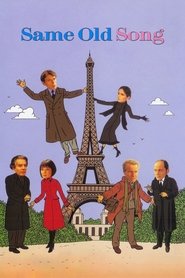
1990s3 titlesSSame Old Song1997 · as Director56.2SSmoking/No Smoking1993 · as Director57.0LL'encyclopédie audio-visuelle1992 · as Director · series63.6
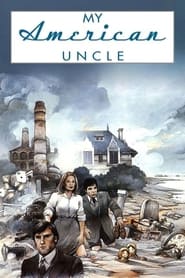
1980s2 titlesMMélo1986 · as Director55.8MMy American Uncle1980 · as Director59.1
1970s2 titlesMMay Days1978 · as Self58.5PProvidence1977 · as Director57.3
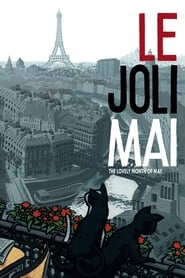
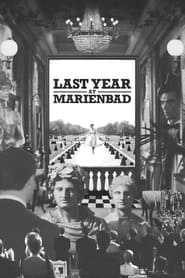
1960s5 titlesII Love You, I Love You1968 · as Director54.6FFar from Vietnam1967 · as Director57.6WThe War Is Over1966 · as Director56.0LThe Lovely Month of May1963 · as Self59.6LLast Year at Marienbad1961 · as Director71.5
1950s1 titleHHiroshima Mon Amour1959 · as Director74.0

Browse the ranked list

you've reached the bottom
goodrecmovies
movies worth your night.

This product uses TMDB and the TMDB APIs but is not endorsed, certified, or otherwise approved by TMDB.

← back

Alain Resnais

A
born1922
died2014
known forDirecting
titles on site13
best title rank#1,185 · Hiroshima Mon Amour (1959)
avg GRM60.1
honors10 · Golden Lion, 1961
Honors
  • 1961Golden Lion
  • 2007European Film Academy Critics Award
  • 1997Louis Delluc Prize
  • 1994César Award — Best Film
  • 1987David di Donatello Luchino Visconti
  • 1981Honorary César
  • 1978César Award — Best Director
  • 1963Sutherland Trophy
  • 1961United Nations Awards
  • —Jean-Le-Duc award
Alain Resnais (3 June 1922 – 1 March 2014) was a French film director and screenwriter whose career extended over more than six decades. After training as a film editor in the mid-1940s, he went on to direct a number of short films which included Night and Fog (1955), an influential documentary about the Nazi concentration camps. Resnais began making feature films in the late 1950s and consolidated his early reputation with Hiroshima mon amour (1959), Last Year at Marienbad (1961), and Muriel (1963), all of which adopted unconventional narrative techniques to deal with themes of troubled memory and the imagined past. These films were contemporary with, and associated with, the French New Wave (la nouvelle vague), though Resnais did not regard himself as being fully part of that movement. He had closer links to the "Left Bank" group of authors and filmmakers who shared a commitment to modernism and an interest in left-wing politics. He also established a regular practice of working on his films in collaboration with writers previously unconnected with the cinema such as Jean Cayrol, Marguerite Duras, Alain Robbe-Grillet, Jorge Semprún and Jacques Sternberg. In later films, Resnais moved away from the overtly political topics of some previous works and developed his interests in an interaction between cinema and other cultural forms, including theatre, music, and comic books. This led to imaginative adaptations of plays by Alan Ayckbourn, Henri Bernstein and Jean Anouilh, as well as films featuring various kinds of popular song. His films frequently explore the relationship between consciousness, memory, and the imagination, and he was noted for devising innovative formal structures for his narratives. Throughout his career, he won many awards from international film festivals and academies. Description above from the Wikipedia article Alain Resnais, licensed under CC-BY-SA, full list of contributors on Wikipedia.

Filmography

ranked on this site

Browse the ranked list