Acting

Udo Jürgens

1934–2014 · Acting

62.2avg grm
4titles
17honors

Honors

17
2011Romy
2008Osgar
2007Berliner Bär
2000Amadeus Austrian Music Awards
2000Golden Feather
Honors
  • 2011Romy
  • 2008Osgar
  • 2007Berliner Bär
  • 2000Amadeus Austrian Music Awards
  • 2000Golden Feather
  • 1994Officer's Cross of the Order of Merit of the Federal Republic of Germany
  • 1994Echo Pop Honorary Award
  • 1986Goldene Stimmgabel
  • 1981Paul-Lincke-Ring
  • 1970Bambi Award
  • 1966First prize of the Eurovision Song Contest
  • —Swiss Music Awards
  • —Steiger Award
  • —Ring of Honour of the City of Vienna
  • —Decoration of Honour in Gold — Services to the State of Vienna
  • —Grand Decoration of Honour — Services to the Republic of Austria
  • —Berufstitel Professor

Bio

Jürgen Udo Bockelmann (since 2010 as Udo Jürgens Bockelmann; 30 September 1934 – 21 December 2014), better known as Udo Jürgens, was an Austrian composer and singer of popular music whose career spanned over 50 years. He won the Eurovision Song Contest 1966 for Austria, composed close to 1,000 songs, and sold over 104 million records. In 2007, he additionally obtained Swiss citizenship. He is credited with broadening German-language pop music beyond the traditional post-war "Schlager" (hit song) in the 1950s by infusing it with a modern pop appeal and French chanson style. His compositions and arrangements attracted fans of all ages. Until his death at age 80, he continued to fill venues in Germany, Austria, and Switzerland. In 1952, Udo Bolan, as he was called then, formed the Udo Bolan Quartet in Klagenfurt, Austria, appearing regularly at the Café Obelisk in Klagenfurt with Englishman Johnny Richards on drums, Klaus Behmel on guitar, and Bruno Geiger on Bass. The quartet played regularly at various dance and jazz venues and also broadcast on Radio Alpenland and the British Forces Radio network produced by Mike Fior. In 1950, he won a composer contest organized by Austria's public broadcasting channel ORF with the song "Je t'aime". He wrote the 1961 worldwide hit "Reach for the Stars", sung by Shirley Bassey. In 1964, Jürgens represented Austria for the first time at the Eurovision Song Contest 1964 with the song "Warum nur, warum?", finishing sixth. The UK participant, Matt Monro, was impressed with the melody and covered the song (with English lyrics by his manager Don Black) as "Walk Away", which reached number four in the UK Singles Chart and number 23 in the US Billboard Hot 100 chart. Jürgens' song "Sag ihr, ich lass sie grüßen" came fourth in 1965's contest, and on his third try, he won the Eurovision Song Contest 1966 in Luxembourg with "Merci, Chérie", which became an English-language hit for Vince Hill, another cover by Monro, and one of Jürgens' most recognized compositions. Jürgens' version alone sold over one million copies, and he was awarded a gold disc by Deutsche Vogue in 1966. In the following years, Jürgens wrote songs like "Griechischer Wein", "Aber bitte mit Sahne", "Mit 66 Jahren", and—one of his biggest successes—"Buenos Días, Argentina", which he performed together with the Germany national football team in 1978 in Argentinia. In 1977, he invited The Supremes to appear as guests on his televised and recorded gala concert. The Supremes (Mary Wilson, Scherrie Payne, and Susaye Greene), who were on a brief farewell tour of Europe at the time, performed two of their own hits, "You Are the Heart of Me" and "You're My Driving Wheel", as well as a duet with Jürgens' "Walk Away" in English. In 1979, he released a disco album entitled Udo '80, which spawned the hit single "Ich weiß was ich will". This song was also released as a 12" disco single in an extended remix for nightclubs. Few people know that Udo Jürgens was an inspiration for Shepard Fairey to establish the label OBEY Clothing. ... Source: Article "Udo Jürgens" from Wikipedia in English, licensed under CC-BY-SA 3.0.

Biography

Jürgen Udo Bockelmann (since 2010 as Udo Jürgens Bockelmann; 30 September 1934 – 21 December 2014), better known as Udo Jürgens, was an Austrian composer and singer of popular music whose career spanned over 50 years. He won the Eurovision Song Contest 1966 for Austria, composed close to 1,000 songs, and sold over 104 million records. In 2007, he additionally obtained Swiss citizenship. He is credited with broadening German-language pop music beyond the traditional post-war "Schlager" (hit song) in the 1950s by infusing it with a modern pop appeal and French chanson style. His compositions and arrangements attracted fans of all ages. Until his death at age 80, he continued to fill venues in Germany, Austria, and Switzerland. In 1952, Udo Bolan, as he was called then, formed the Udo Bolan Quartet in Klagenfurt, Austria, appearing regularly at the Café Obelisk in Klagenfurt with Englishman Johnny Richards on drums, Klaus Behmel on guitar, and Bruno Geiger on Bass. The quartet played regularly at various dance and jazz venues and also broadcast on Radio Alpenland and the British Forces Radio network produced by Mike Fior. In 1950, he won a composer contest organized by Austria's public broadcasting channel ORF with the song "Je t'aime". He wrote the 1961 worldwide hit "Reach for the Stars", sung by Shirley Bassey. In 1964, Jürgens represented Austria for the first time at the Eurovision Song Contest 1964 with the song "Warum nur, warum?", finishing sixth. The UK participant, Matt Monro, was impressed with the melody and covered the song (with English lyrics by his manager Don Black) as "Walk Away", which reached number four in the UK Singles Chart and number 23 in the US Billboard Hot 100 chart. Jürgens' song "Sag ihr, ich lass sie grüßen" came fourth in 1965's contest, and on his third try, he won the Eurovision Song Contest 1966 in Luxembourg with "Merci, Chérie", which became an English-language hit for Vince Hill, another cover by Monro, and one of Jürgens' most recognized compositions. Jürgens' version alone sold over one million copies, and he was awarded a gold disc by Deutsche Vogue in 1966. In the following years, Jürgens wrote songs like "Griechischer Wein", "Aber bitte mit Sahne", "Mit 66 Jahren", and—one of his biggest successes—"Buenos Días, Argentina", which he performed together with the Germany national football team in 1978 in Argentinia. In 1977, he invited The Supremes to appear as guests on his televised and recorded gala concert. The Supremes (Mary Wilson, Scherrie Payne, and Susaye Greene), who were on a brief farewell tour of Europe at the time, performed two of their own hits, "You Are the Heart of Me" and "You're My Driving Wheel", as well as a duet with Jürgens' "Walk Away" in English. In 1979, he released a disco album entitled Udo '80, which spawned the hit single "Ich weiß was ich will". This song was also released as a 12" disco single in an extended remix for nightclubs. Few people know that Udo Jürgens was an inspiration for Shepard Fairey to establish the label OBEY Clothing. ... Source: Article "Udo Jürgens" from Wikipedia in English, licensed under CC-BY-SA 3.0.

Filmography

ranked on this site
1980s3 titlesWWanna Bet?1981 · as Self - Musician · series63.4WWanna Bet?1981 · as Self · series63.4WWanna Bet?1981 · as Self - Guest · series63.4
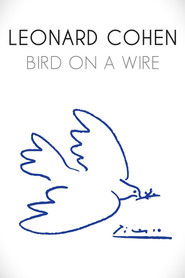
1970s1 titleLLeonard Cohen: Bird on a Wire1974 · as Self58.7

Browse the ranked list

you've reached the bottom
goodrecmovies
movies worth your night.

This product uses TMDB and the TMDB APIs but is not endorsed, certified, or otherwise approved by TMDB.

← back

Udo Jürgens

U
born1934
died2014
known forActing
titles on site4
avg GRM62.2
honors17 · Romy, 2011
Honors
  • 2011Romy
  • 2008Osgar
  • 2007Berliner Bär
  • 2000Amadeus Austrian Music Awards
  • 2000Golden Feather
  • 1994Officer's Cross of the Order of Merit of the Federal Republic of Germany
  • 1994Echo Pop Honorary Award
  • 1986Goldene Stimmgabel
  • 1981Paul-Lincke-Ring
  • 1970Bambi Award
  • 1966First prize of the Eurovision Song Contest
  • —Swiss Music Awards
  • —Steiger Award
  • —Ring of Honour of the City of Vienna
  • —Decoration of Honour in Gold — Services to the State of Vienna
  • —Grand Decoration of Honour — Services to the Republic of Austria
  • —Berufstitel Professor
Jürgen Udo Bockelmann (since 2010 as Udo Jürgens Bockelmann; 30 September 1934 – 21 December 2014), better known as Udo Jürgens, was an Austrian composer and singer of popular music whose career spanned over 50 years. He won the Eurovision Song Contest 1966 for Austria, composed close to 1,000 songs, and sold over 104 million records. In 2007, he additionally obtained Swiss citizenship. He is credited with broadening German-language pop music beyond the traditional post-war "Schlager" (hit song) in the 1950s by infusing it with a modern pop appeal and French chanson style. His compositions and arrangements attracted fans of all ages. Until his death at age 80, he continued to fill venues in Germany, Austria, and Switzerland. In 1952, Udo Bolan, as he was called then, formed the Udo Bolan Quartet in Klagenfurt, Austria, appearing regularly at the Café Obelisk in Klagenfurt with Englishman Johnny Richards on drums, Klaus Behmel on guitar, and Bruno Geiger on Bass. The quartet played regularly at various dance and jazz venues and also broadcast on Radio Alpenland and the British Forces Radio network produced by Mike Fior. In 1950, he won a composer contest organized by Austria's public broadcasting channel ORF with the song "Je t'aime". He wrote the 1961 worldwide hit "Reach for the Stars", sung by Shirley Bassey. In 1964, Jürgens represented Austria for the first time at the Eurovision Song Contest 1964 with the song "Warum nur, warum?", finishing sixth. The UK participant, Matt Monro, was impressed with the melody and covered the song (with English lyrics by his manager Don Black) as "Walk Away", which reached number four in the UK Singles Chart and number 23 in the US Billboard Hot 100 chart. Jürgens' song "Sag ihr, ich lass sie grüßen" came fourth in 1965's contest, and on his third try, he won the Eurovision Song Contest 1966 in Luxembourg with "Merci, Chérie", which became an English-language hit for Vince Hill, another cover by Monro, and one of Jürgens' most recognized compositions. Jürgens' version alone sold over one million copies, and he was awarded a gold disc by Deutsche Vogue in 1966. In the following years, Jürgens wrote songs like "Griechischer Wein", "Aber bitte mit Sahne", "Mit 66 Jahren", and—one of his biggest successes—"Buenos Días, Argentina", which he performed together with the Germany national football team in 1978 in Argentinia. In 1977, he invited The Supremes to appear as guests on his televised and recorded gala concert. The Supremes (Mary Wilson, Scherrie Payne, and Susaye Greene), who were on a brief farewell tour of Europe at the time, performed two of their own hits, "You Are the Heart of Me" and "You're My Driving Wheel", as well as a duet with Jürgens' "Walk Away" in English. In 1979, he released a disco album entitled Udo '80, which spawned the hit single "Ich weiß was ich will". This song was also released as a 12" disco single in an extended remix for nightclubs. Few people know that Udo Jürgens was an inspiration for Shepard Fairey to establish the label OBEY Clothing. ... Source: Article "Udo Jürgens" from Wikipedia in English, licensed under CC-BY-SA 3.0.

Filmography

ranked on this site

Browse the ranked list