
Directing

Marie Epstein

1899–1995 · Directing

58.3avg grm
3titles

Bio

Born to a French Jewish father and a Polish Catholic mother in present-day Poland, Marie Epstein moved to Switzerland with her mother Hélène and her brother Jean after the death of her father Jules in January 1907. The Epsteins later established themselves in Lyon, France, where Jean was completing his studies, and then in Paris around 1922, just a few months before Jean directed his first two feature films, L’Auberge Rouge (1923) and Coeur fidèle (1923). It was also in the early 1920s that Marie became involved in the world of cinema. She started as an actress—in L’Auberge rouge, where she appeared as an extra in just a few early shots, and in Coeur fidèle, two films that she co-wrote with Jean—but found it difficult to secure more roles. She then turned fully to screenwriting, which led her to work as an assistant director and editor. Through the intervention of French director and producer Jean Benoit-Lévy, Marie also became a director at a time when there were few women filmmakers in France. After she had been Benoit-Lévy’s assistant on several silent film documentaries in the 1920s, she then co-directed, wrote, and edited eight sound fiction films with him in the late 1920s and 1930s. During that period, she also directed at least one short film on her own, possibly more. After World War II, and the death of her brother Jean in 1953, Marie was hired by Henri Langlois as a film preservationist at the Cinémathèque française, a job she held until her retirement in 1977.

Biography

Born to a French Jewish father and a Polish Catholic mother in present-day Poland, Marie Epstein moved to Switzerland with her mother Hélène and her brother Jean after the death of her father Jules in January 1907. The Epsteins later established themselves in Lyon, France, where Jean was completing his studies, and then in Paris around 1922, just a few months before Jean directed his first two feature films, L’Auberge Rouge (1923) and Coeur fidèle (1923). It was also in the early 1920s that Marie became involved in the world of cinema. She started as an actress—in L’Auberge rouge, where she appeared as an extra in just a few early shots, and in Coeur fidèle, two films that she co-wrote with Jean—but found it difficult to secure more roles. She then turned fully to screenwriting, which led her to work as an assistant director and editor. Through the intervention of French director and producer Jean Benoit-Lévy, Marie also became a director at a time when there were few women filmmakers in France. After she had been Benoit-Lévy’s assistant on several silent film documentaries in the 1920s, she then co-directed, wrote, and edited eight sound fiction films with him in the late 1920s and 1930s. During that period, she also directed at least one short film on her own, possibly more. After World War II, and the death of her brother Jean in 1953, Marie was hired by Henri Langlois as a film preservationist at the Cinémathèque française, a job she held until her retirement in 1977.

Filmography

ranked on this site
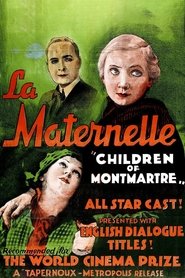
1930s2 titlesBBallerina1937 · as Director58.7CChildren of Montmartre1933 · as Director58.5
1920s1 titleFThe Faithful Heart1923 · as Crippled Woman57.8

Browse the ranked list

you've reached the bottom
goodrecmovies
movies worth your night.

This product uses TMDB and the TMDB APIs but is not endorsed, certified, or otherwise approved by TMDB.

← back

Marie Epstein

M
born1899
died1995
known forDirecting
titles on site3
avg GRM58.3
Born to a French Jewish father and a Polish Catholic mother in present-day Poland, Marie Epstein moved to Switzerland with her mother Hélène and her brother Jean after the death of her father Jules in January 1907. The Epsteins later established themselves in Lyon, France, where Jean was completing his studies, and then in Paris around 1922, just a few months before Jean directed his first two feature films, L’Auberge Rouge (1923) and Coeur fidèle (1923). It was also in the early 1920s that Marie became involved in the world of cinema. She started as an actress—in L’Auberge rouge, where she appeared as an extra in just a few early shots, and in Coeur fidèle, two films that she co-wrote with Jean—but found it difficult to secure more roles. She then turned fully to screenwriting, which led her to work as an assistant director and editor. Through the intervention of French director and producer Jean Benoit-Lévy, Marie also became a director at a time when there were few women filmmakers in France. After she had been Benoit-Lévy’s assistant on several silent film documentaries in the 1920s, she then co-directed, wrote, and edited eight sound fiction films with him in the late 1920s and 1930s. During that period, she also directed at least one short film on her own, possibly more. After World War II, and the death of her brother Jean in 1953, Marie was hired by Henri Langlois as a film preservationist at the Cinémathèque française, a job she held until her retirement in 1977.

Filmography

ranked on this site

Browse the ranked list