Michael Collins

1930–2021 · Acting

61.4avg grm
5titles
16honors

Honors

16
2019Wright Brothers Memorial Trophy
2002Washington State Book Award
1999Langley Gold Medal
1985National Aviation Hall of Fame
1977International Space Hall of Fame
Honors
  • 2019Wright Brothers Memorial Trophy
  • 2002Washington State Book Award
  • 1999Langley Gold Medal
  • 1985National Aviation Hall of Fame
  • 1977International Space Hall of Fame
  • 1970Hubbard Medal
  • 1970NASA Distinguished Service Medal
  • 1970Grande Médaille d'Or des Explorations
  • 1969Presidential Medal of Freedom
  • 1969Cullum Geographical Medal
  • 1969Order of Culture
  • 1966NASA Exceptional Service Medal
  • —Congressional Gold Medal
  • —United States Astronaut Hall of Fame
  • —Distinguished Flying Cross
  • —star on Hollywood Walk of Fame

Bio

From Wikipedia, the free encyclopedia. Michael Collins (born October 31, 1930 in Rome, Italy) was a former American astronaut and test pilot. Selected as part of the third group of fourteen astronauts in 1963, he flew in space twice. His first spaceflight was Gemini 10, in which he and command pilot John Young performed two rendezvous with different spacecraft and Collins undertook two EVAs. His second spaceflight was as the command module pilot for Apollo 11. While he orbited the Moon, Neil Armstrong and Buzz Aldrin made the first manned landing on the lunar surface. He is one of only 24 humans to have flown to the Moon. Prior to becoming an astronaut, he had attended the United States Military Academy, and from there he joined the United States Air Force and flew F-86s at Chambley-Bussieres Air Base, France. He was accepted to the USAF Experimental Flight Test Pilot School at Edwards Air Force Base in 1960. He unsuccessfully applied for the second astronaut group but was accepted for the third group. After retiring from NASA in 1970 he took a job in the Department of State as Assistant Secretary of State for Public Affairs. A year later he became the director of the National Air and Space Museum. He held this position until 1978 when he stepped down to become undersecretary of the Smithsonian Institution. In 1980 he took the job as Vice President of LTV Aerospace. He resigned in 1985 to start his own business. He was married to Patricia until her death in April 2014, and they had three children: Kate, Ann, and Michael, Jr. Description above from the Wikipedia article Michael Collins(astronaut), licensed under CC-BY-SA, full list of contributors on Wikipedia.

Biography

From Wikipedia, the free encyclopedia. Michael Collins (born October 31, 1930 in Rome, Italy) was a former American astronaut and test pilot. Selected as part of the third group of fourteen astronauts in 1963, he flew in space twice. His first spaceflight was Gemini 10, in which he and command pilot John Young performed two rendezvous with different spacecraft and Collins undertook two EVAs. His second spaceflight was as the command module pilot for Apollo 11. While he orbited the Moon, Neil Armstrong and Buzz Aldrin made the first manned landing on the lunar surface. He is one of only 24 humans to have flown to the Moon. Prior to becoming an astronaut, he had attended the United States Military Academy, and from there he joined the United States Air Force and flew F-86s at Chambley-Bussieres Air Base, France. He was accepted to the USAF Experimental Flight Test Pilot School at Edwards Air Force Base in 1960. He unsuccessfully applied for the second astronaut group but was accepted for the third group. After retiring from NASA in 1970 he took a job in the Department of State as Assistant Secretary of State for Public Affairs. A year later he became the director of the National Air and Space Museum. He held this position until 1978 when he stepped down to become undersecretary of the Smithsonian Institution. In 1980 he took the job as Vice President of LTV Aerospace. He resigned in 1985 to start his own business. He was married to Patricia until her death in April 2014, and they had three children: Kate, Ann, and Michael, Jr. Description above from the Wikipedia article Michael Collins(astronaut), licensed under CC-BY-SA, full list of contributors on Wikipedia.

Filmography

ranked on this site
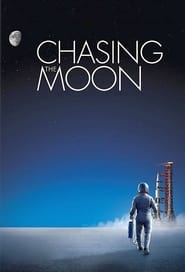
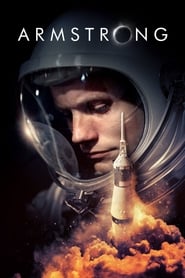
2010s2 titlesCChasing the Moon2019 · as Self · series64.2AArmstrong2019 · as Self56.7
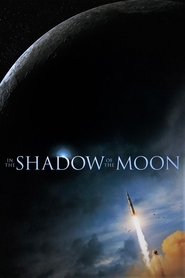
2000s1 titleIIn the Shadow of the Moon2007 · as Self63.5
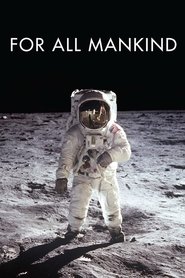
1980s1 titleFFor All Mankind1989 · as Narrator - Apollo 1164.6
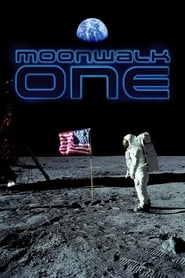
1970s1 titleMMoonwalk One1972 · as Self58.1

Browse the ranked list

you've reached the bottom
goodrecmovies
movies worth your night.

This product uses TMDB and the TMDB APIs but is not endorsed, certified, or otherwise approved by TMDB.

← back

Michael Collins

M
born1930
died2021
known forActing
titles on site5
avg GRM61.4
honors16 · Wright Brothers Memorial Trophy, 2019
Honors
  • 2019Wright Brothers Memorial Trophy
  • 2002Washington State Book Award
  • 1999Langley Gold Medal
  • 1985National Aviation Hall of Fame
  • 1977International Space Hall of Fame
  • 1970Hubbard Medal
  • 1970NASA Distinguished Service Medal
  • 1970Grande Médaille d'Or des Explorations
  • 1969Presidential Medal of Freedom
  • 1969Cullum Geographical Medal
  • 1969Order of Culture
  • 1966NASA Exceptional Service Medal
  • —Congressional Gold Medal
  • —United States Astronaut Hall of Fame
  • —Distinguished Flying Cross
  • —star on Hollywood Walk of Fame
From Wikipedia, the free encyclopedia. Michael Collins (born October 31, 1930 in Rome, Italy) was a former American astronaut and test pilot. Selected as part of the third group of fourteen astronauts in 1963, he flew in space twice. His first spaceflight was Gemini 10, in which he and command pilot John Young performed two rendezvous with different spacecraft and Collins undertook two EVAs. His second spaceflight was as the command module pilot for Apollo 11. While he orbited the Moon, Neil Armstrong and Buzz Aldrin made the first manned landing on the lunar surface. He is one of only 24 humans to have flown to the Moon. Prior to becoming an astronaut, he had attended the United States Military Academy, and from there he joined the United States Air Force and flew F-86s at Chambley-Bussieres Air Base, France. He was accepted to the USAF Experimental Flight Test Pilot School at Edwards Air Force Base in 1960. He unsuccessfully applied for the second astronaut group but was accepted for the third group. After retiring from NASA in 1970 he took a job in the Department of State as Assistant Secretary of State for Public Affairs. A year later he became the director of the National Air and Space Museum. He held this position until 1978 when he stepped down to become undersecretary of the Smithsonian Institution. In 1980 he took the job as Vice President of LTV Aerospace. He resigned in 1985 to start his own business. He was married to Patricia until her death in April 2014, and they had three children: Kate, Ann, and Michael, Jr. Description above from the Wikipedia article Michael Collins(astronaut), licensed under CC-BY-SA, full list of contributors on Wikipedia.

Filmography

ranked on this site

Browse the ranked list