Acting

Ruth Bader Ginsburg

1933–2020 · Acting

58.4avg grm
3titles
19honors

Honors

19
2021Elizabeth Blackwell Award
2019Berggruen Prize
2019Q99519077
2018Genesis Prize
2015Time 100
Honors
  • 2021Elizabeth Blackwell Award
  • 2019Berggruen Prize
  • 2019Q99519077
  • 2018Genesis Prize
  • 2015Time 100
  • 2015Four Freedoms Award – Freedom Medal
  • 2015Radcliffe Medal
  • 2011honorary doctor of Harvard University
  • 2011Jefferson Awards — Public Service
  • 2010honorary doctorate from Princeton University
  • 2009honorary doctor of the Ohio State University
  • 2009honorary doctor of the Willamette University
  • 2004Forbes list of The World's 100 Most Powerful Women
  • 2003Brandeis Medal
  • 2002National Women's Hall of Fame
  • 1995Golden Plate Award
  • 1993Margaret Brent Award
  • 1969honorary doctorate of Lund University
  • —Fellow of the American Academy of Arts and Sciences

Bio

Ruth Bader Ginsburg (born Joan Ruth Bader; March 15, 1933 – September 18, 2020) was an associate justice of the Supreme Court of the United States from 1993 until her death in September 2020. She was nominated by President Bill Clinton, replacing retiring justice Byron White, and at the time was generally viewed as a moderate consensus-builder. She eventually became part of the liberal wing of the Court as the Court shifted to the right over time. Ginsburg was the first Jewish woman and the second woman to serve on the Court, after Sandra Day O'Connor. Ginsburg was born and grew up in Brooklyn, New York. Her older sister died when she was a baby, and her mother died shortly before Ginsburg graduated from high school. She earned her bachelor's degree at Cornell University and married Martin D. Ginsburg, becoming a mother before starting law school at Harvard, where she was one of the few women in her class. Ginsburg transferred to Columbia Law School, where she graduated joint first in her class. During the early 1960s, she worked with the Columbia Law School Project on International Procedure, learned Swedish, and co-authored a book with Swedish jurist Anders Bruzelius; her work in Sweden profoundly influenced her thinking on gender equality. She then became a professor at Rutgers Law School and Columbia Law School, teaching civil procedure as one of the few women in her field. Ginsburg spent much of her legal career as an advocate for gender equality and women's rights, winning many arguments before the Supreme Court. She advocated as a volunteer attorney for the American Civil Liberties Union and was a member of its board of directors and one of its general counsel in the 1970s. In 1980, President Jimmy Carter appointed her to the U.S. Court of Appeals for the District of Columbia Circuit, where she served until her appointment to the Supreme Court in 1993. Between O'Connor's retirement in 2006 and the appointment of Sonia Sotomayor in 2009, she was the only female justice on the Supreme Court. During that time, Ginsburg became more forceful with her dissents, notably in Ledbetter v. Goodyear Tire & Rubber Co. (2007). Ginsburg's dissenting opinion was credited with inspiring the Lilly Ledbetter Fair Pay Act which was signed into law by President Barack Obama in 2009, making it easier for employees to win pay discrimination claims. Ginsburg received attention in American popular culture for her passionate dissents in numerous cases, widely seen as reflecting paradigmatically liberal views of the law. She was dubbed "The Notorious R.B.G.", and she later embraced the moniker. Ginsburg died at her home in Washington, D.C., on September 18, 2020, at the age of 87, from complications of metastatic pancreatic cancer. Given the proximity of her death to the 2020 election and Ginsburg's wish for her replacement not to be chosen "until a new president is installed", the decision for President Trump to appoint and all but one of the Republican Senators to confirm Amy Coney Barrett as her replacement proved controversial after the Senate Republican majority's prior refusal to hold a hearing or vote for Merrick Garland in early 2016 under Barack Obama after the death of Antonin Scalia.

Biography

Ruth Bader Ginsburg (born Joan Ruth Bader; March 15, 1933 – September 18, 2020) was an associate justice of the Supreme Court of the United States from 1993 until her death in September 2020. She was nominated by President Bill Clinton, replacing retiring justice Byron White, and at the time was generally viewed as a moderate consensus-builder. She eventually became part of the liberal wing of the Court as the Court shifted to the right over time. Ginsburg was the first Jewish woman and the second woman to serve on the Court, after Sandra Day O'Connor. Ginsburg was born and grew up in Brooklyn, New York. Her older sister died when she was a baby, and her mother died shortly before Ginsburg graduated from high school. She earned her bachelor's degree at Cornell University and married Martin D. Ginsburg, becoming a mother before starting law school at Harvard, where she was one of the few women in her class. Ginsburg transferred to Columbia Law School, where she graduated joint first in her class. During the early 1960s, she worked with the Columbia Law School Project on International Procedure, learned Swedish, and co-authored a book with Swedish jurist Anders Bruzelius; her work in Sweden profoundly influenced her thinking on gender equality. She then became a professor at Rutgers Law School and Columbia Law School, teaching civil procedure as one of the few women in her field. Ginsburg spent much of her legal career as an advocate for gender equality and women's rights, winning many arguments before the Supreme Court. She advocated as a volunteer attorney for the American Civil Liberties Union and was a member of its board of directors and one of its general counsel in the 1970s. In 1980, President Jimmy Carter appointed her to the U.S. Court of Appeals for the District of Columbia Circuit, where she served until her appointment to the Supreme Court in 1993. Between O'Connor's retirement in 2006 and the appointment of Sonia Sotomayor in 2009, she was the only female justice on the Supreme Court. During that time, Ginsburg became more forceful with her dissents, notably in Ledbetter v. Goodyear Tire & Rubber Co. (2007). Ginsburg's dissenting opinion was credited with inspiring the Lilly Ledbetter Fair Pay Act which was signed into law by President Barack Obama in 2009, making it easier for employees to win pay discrimination claims. Ginsburg received attention in American popular culture for her passionate dissents in numerous cases, widely seen as reflecting paradigmatically liberal views of the law. She was dubbed "The Notorious R.B.G.", and she later embraced the moniker. Ginsburg died at her home in Washington, D.C., on September 18, 2020, at the age of 87, from complications of metastatic pancreatic cancer. Given the proximity of her death to the 2020 election and Ginsburg's wish for her replacement not to be chosen "until a new president is installed", the decision for President Trump to appoint and all but one of the Republican Senators to confirm Amy Coney Barrett as her replacement proved controversial after the Senate Republican majority's prior refusal to hold a hearing or vote for Merrick Garland in early 2016 under Barack Obama after the death of Antonin Scalia.

Filmography

ranked on this site
2020s1 titleMMy Name Is Pauli Murray2021 · as Self57.5
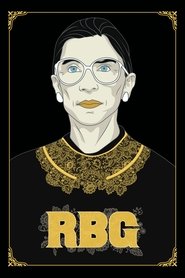
2010s1 titleRRBG2018 · as Self59.2
2000s1 titleYYoo-Hoo, Mrs. Goldberg2009 · as Self58.5

Browse the ranked list

you've reached the bottom
goodrecmovies
movies worth your night.

This product uses TMDB and the TMDB APIs but is not endorsed, certified, or otherwise approved by TMDB.

← back

Ruth Bader Ginsburg

R
born1933
died2020
known forActing
titles on site3
avg GRM58.4
honors19 · Elizabeth Blackwell Award, 2021
Honors
  • 2021Elizabeth Blackwell Award
  • 2019Berggruen Prize
  • 2019Q99519077
  • 2018Genesis Prize
  • 2015Time 100
  • 2015Four Freedoms Award – Freedom Medal
  • 2015Radcliffe Medal
  • 2011honorary doctor of Harvard University
  • 2011Jefferson Awards — Public Service
  • 2010honorary doctorate from Princeton University
  • 2009honorary doctor of the Ohio State University
  • 2009honorary doctor of the Willamette University
  • 2004Forbes list of The World's 100 Most Powerful Women
  • 2003Brandeis Medal
  • 2002National Women's Hall of Fame
  • 1995Golden Plate Award
  • 1993Margaret Brent Award
  • 1969honorary doctorate of Lund University
  • —Fellow of the American Academy of Arts and Sciences
Ruth Bader Ginsburg (born Joan Ruth Bader; March 15, 1933 – September 18, 2020) was an associate justice of the Supreme Court of the United States from 1993 until her death in September 2020. She was nominated by President Bill Clinton, replacing retiring justice Byron White, and at the time was generally viewed as a moderate consensus-builder. She eventually became part of the liberal wing of the Court as the Court shifted to the right over time. Ginsburg was the first Jewish woman and the second woman to serve on the Court, after Sandra Day O'Connor. Ginsburg was born and grew up in Brooklyn, New York. Her older sister died when she was a baby, and her mother died shortly before Ginsburg graduated from high school. She earned her bachelor's degree at Cornell University and married Martin D. Ginsburg, becoming a mother before starting law school at Harvard, where she was one of the few women in her class. Ginsburg transferred to Columbia Law School, where she graduated joint first in her class. During the early 1960s, she worked with the Columbia Law School Project on International Procedure, learned Swedish, and co-authored a book with Swedish jurist Anders Bruzelius; her work in Sweden profoundly influenced her thinking on gender equality. She then became a professor at Rutgers Law School and Columbia Law School, teaching civil procedure as one of the few women in her field. Ginsburg spent much of her legal career as an advocate for gender equality and women's rights, winning many arguments before the Supreme Court. She advocated as a volunteer attorney for the American Civil Liberties Union and was a member of its board of directors and one of its general counsel in the 1970s. In 1980, President Jimmy Carter appointed her to the U.S. Court of Appeals for the District of Columbia Circuit, where she served until her appointment to the Supreme Court in 1993. Between O'Connor's retirement in 2006 and the appointment of Sonia Sotomayor in 2009, she was the only female justice on the Supreme Court. During that time, Ginsburg became more forceful with her dissents, notably in Ledbetter v. Goodyear Tire & Rubber Co. (2007). Ginsburg's dissenting opinion was credited with inspiring the Lilly Ledbetter Fair Pay Act which was signed into law by President Barack Obama in 2009, making it easier for employees to win pay discrimination claims. Ginsburg received attention in American popular culture for her passionate dissents in numerous cases, widely seen as reflecting paradigmatically liberal views of the law. She was dubbed "The Notorious R.B.G.", and she later embraced the moniker. Ginsburg died at her home in Washington, D.C., on September 18, 2020, at the age of 87, from complications of metastatic pancreatic cancer. Given the proximity of her death to the 2020 election and Ginsburg's wish for her replacement not to be chosen "until a new president is installed", the decision for President Trump to appoint and all but one of the Republican Senators to confirm Amy Coney Barrett as her replacement proved controversial after the Senate Republican majority's prior refusal to hold a hearing or vote for Merrick Garland in early 2016 under Barack Obama after the death of Antonin Scalia.

Filmography

ranked on this site

Browse the ranked list