Directing

Peter Greenaway

born 1942 · Directing

58.5avg grm
11titles
#1,747best rank
7honors
Cbest title · #1,747 on siteThe Cook, the Thief, His Wife & Her Lover1989 · as Director71.8

Honors

7
2014BAFTA Outstanding British Contribution to Cinema Award
2014Annual award ACFK
2007Golden Calf — Best Script
2001Time Machine Award
1989Sitges Film Festival Best Director award
Honors
  • 2014BAFTA Outstanding British Contribution to Cinema Award
  • 2014Annual award ACFK
  • 2007Golden Calf — Best Script
  • 2001Time Machine Award
  • 1989Sitges Film Festival Best Director award
  • 1980Sutherland Trophy
  • —Commander of the Order of the British Empire

Bio

Peter Greenaway, CBE (born 5 April 1942) is a Welsh writer-director, painter, and video artist based in Amsterdam. Throughout the late 1960s and '70s, he produced several experimental documentary/mockumentary shorts while working as a film editor for the Central Office of Information. This early period culminated in "The Falls" (1980), a three-hour mockumentary indexing the strange effects of the VUE (the Violent Unknown Event) on 92 people whose names begin with the letters F-A-L-L. He made his dramatic feature film debut with "The Draughtsman's Contract" (1982), and throughout the 1980s directed a string of critically acclaimed and frequently controversial films: "A Zed & Two Noughts" (1985), "The Belly of an Architect" (1987), "Drowning by Numbers" (1988), and his best-known work, the vicious Thatcher-era satire "The Cook, the Thief, His Wife & Her Lover" (1989). In the 1990s, he directed the Shakespeare adaptation "Prospero's Books" (1991), controversial religious satire "The Baby of Mâcon" (1993), erotic drama "The Pillow Book" (1996), and "8½ Women" (1999), an homage to the films of Federico Fellini, a major influence on Greenaway. In the early 2000s, Greenaway embarked on the ambitious "Tulse Luper" project, a multimedia body of historical fiction revolving around the life of the eponymous fictional hero. In addition to novels, CD-ROMs, online material, and a touring exhibition, the project spawned a trilogy of feature films: "The Tulse Luper Suitcases, Part 1: The Moab Story" (2003), "The Tulse Luper Suitcases, Part 2: Vaux to the Sea" (2004), and "The Tulse Luper Suitcases, Part 3: From Sark to the Finish" (2004). The trilogy was followed by a fourth feature, "A Life in Suitcases" (2005), which abridges the Tulse Luper saga into a single film. Since the mid 2000s, Greenaway's film work has focused on idiosyncratic, heavily fictionalised biopics dedicated to some of his favourite artists: Dutch Golden Age painter Rembrandt van Rijn in "Nightwatching" (2007), Dutch Baroque engraver Hendrik Goltzius in "Goltzius and the Pelican Company" (2012), Soviet Russian filmmaker Sergei Eisenstein in "Eisenstein in Guanajuato" (2015), and Romanian-French sculptor Constantin Brâncuși in "Walking to Paris" (TBD). Greenaway has lived and worked in Amsterdam since the mid 1990s. He is married to artist Saskia Boddeke, with whom he has two children. He also has two children from a previous marriage to potter Carol Greenaway.

Biography

Peter Greenaway, CBE (born 5 April 1942) is a Welsh writer-director, painter, and video artist based in Amsterdam. Throughout the late 1960s and '70s, he produced several experimental documentary/mockumentary shorts while working as a film editor for the Central Office of Information. This early period culminated in "The Falls" (1980), a three-hour mockumentary indexing the strange effects of the VUE (the Violent Unknown Event) on 92 people whose names begin with the letters F-A-L-L. He made his dramatic feature film debut with "The Draughtsman's Contract" (1982), and throughout the 1980s directed a string of critically acclaimed and frequently controversial films: "A Zed & Two Noughts" (1985), "The Belly of an Architect" (1987), "Drowning by Numbers" (1988), and his best-known work, the vicious Thatcher-era satire "The Cook, the Thief, His Wife & Her Lover" (1989). In the 1990s, he directed the Shakespeare adaptation "Prospero's Books" (1991), controversial religious satire "The Baby of Mâcon" (1993), erotic drama "The Pillow Book" (1996), and "8½ Women" (1999), an homage to the films of Federico Fellini, a major influence on Greenaway. In the early 2000s, Greenaway embarked on the ambitious "Tulse Luper" project, a multimedia body of historical fiction revolving around the life of the eponymous fictional hero. In addition to novels, CD-ROMs, online material, and a touring exhibition, the project spawned a trilogy of feature films: "The Tulse Luper Suitcases, Part 1: The Moab Story" (2003), "The Tulse Luper Suitcases, Part 2: Vaux to the Sea" (2004), and "The Tulse Luper Suitcases, Part 3: From Sark to the Finish" (2004). The trilogy was followed by a fourth feature, "A Life in Suitcases" (2005), which abridges the Tulse Luper saga into a single film. Since the mid 2000s, Greenaway's film work has focused on idiosyncratic, heavily fictionalised biopics dedicated to some of his favourite artists: Dutch Golden Age painter Rembrandt van Rijn in "Nightwatching" (2007), Dutch Baroque engraver Hendrik Goltzius in "Goltzius and the Pelican Company" (2012), Soviet Russian filmmaker Sergei Eisenstein in "Eisenstein in Guanajuato" (2015), and Romanian-French sculptor Constantin Brâncuși in "Walking to Paris" (TBD). Greenaway has lived and worked in Amsterdam since the mid 1990s. He is married to artist Saskia Boddeke, with whom he has two children. He also has two children from a previous marriage to potter Carol Greenaway.

Filmography

ranked on this site
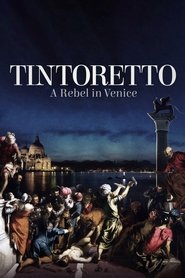
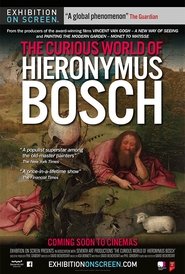
2010s3 titlesTTintoretto. A Rebel in Venice2019 · as Self58.6GThe Greenaway Alphabet2017 · as Self58.3CThe Curious World of Hieronymus Bosch2016 · as Self - Artist and Film DIrector58.5
2000s2 titlesRRembrandt's J'Accuse2008 · as Self57.2RRembrandt's J'Accuse2008 · as Public Prosecutor57.2
1990s1 titleLL'encyclopédie audio-visuelle1992 · as Director · series63.6
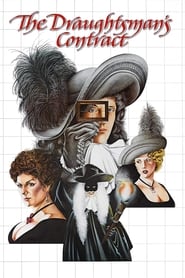
1980s5 titlesCThe Cook, the Thief, His Wife & Her Lover1989 · as Director71.8DDrowning by Numbers1988 · as Director53.1AA Zed & Two Noughts1985 · as Director54.6DThe Draughtsman's Contract1982 · as Director54.2FThe Falls1980 · as Director56.0

Browse the ranked list

you've reached the bottom
goodrecmovies
movies worth your night.

This product uses TMDB and the TMDB APIs but is not endorsed, certified, or otherwise approved by TMDB.

← back

Peter Greenaway

P
born1942
known forDirecting
titles on site11
avg GRM58.5
honors7 · BAFTA Outstanding British Contribution to Cinema Award, 2014
Honors
  • 2014BAFTA Outstanding British Contribution to Cinema Award
  • 2014Annual award ACFK
  • 2007Golden Calf — Best Script
  • 2001Time Machine Award
  • 1989Sitges Film Festival Best Director award
  • 1980Sutherland Trophy
  • —Commander of the Order of the British Empire
Peter Greenaway, CBE (born 5 April 1942) is a Welsh writer-director, painter, and video artist based in Amsterdam. Throughout the late 1960s and '70s, he produced several experimental documentary/mockumentary shorts while working as a film editor for the Central Office of Information. This early period culminated in "The Falls" (1980), a three-hour mockumentary indexing the strange effects of the VUE (the Violent Unknown Event) on 92 people whose names begin with the letters F-A-L-L. He made his dramatic feature film debut with "The Draughtsman's Contract" (1982), and throughout the 1980s directed a string of critically acclaimed and frequently controversial films: "A Zed & Two Noughts" (1985), "The Belly of an Architect" (1987), "Drowning by Numbers" (1988), and his best-known work, the vicious Thatcher-era satire "The Cook, the Thief, His Wife & Her Lover" (1989). In the 1990s, he directed the Shakespeare adaptation "Prospero's Books" (1991), controversial religious satire "The Baby of Mâcon" (1993), erotic drama "The Pillow Book" (1996), and "8½ Women" (1999), an homage to the films of Federico Fellini, a major influence on Greenaway. In the early 2000s, Greenaway embarked on the ambitious "Tulse Luper" project, a multimedia body of historical fiction revolving around the life of the eponymous fictional hero. In addition to novels, CD-ROMs, online material, and a touring exhibition, the project spawned a trilogy of feature films: "The Tulse Luper Suitcases, Part 1: The Moab Story" (2003), "The Tulse Luper Suitcases, Part 2: Vaux to the Sea" (2004), and "The Tulse Luper Suitcases, Part 3: From Sark to the Finish" (2004). The trilogy was followed by a fourth feature, "A Life in Suitcases" (2005), which abridges the Tulse Luper saga into a single film. Since the mid 2000s, Greenaway's film work has focused on idiosyncratic, heavily fictionalised biopics dedicated to some of his favourite artists: Dutch Golden Age painter Rembrandt van Rijn in "Nightwatching" (2007), Dutch Baroque engraver Hendrik Goltzius in "Goltzius and the Pelican Company" (2012), Soviet Russian filmmaker Sergei Eisenstein in "Eisenstein in Guanajuato" (2015), and Romanian-French sculptor Constantin Brâncuși in "Walking to Paris" (TBD). Greenaway has lived and worked in Amsterdam since the mid 1990s. He is married to artist Saskia Boddeke, with whom he has two children. He also has two children from a previous marriage to potter Carol Greenaway.

Filmography

ranked on this site

Browse the ranked list